10 hr
Desert Safari Adventure with Magic Lake & Wadi El Rayan from Cairo
Full-day expedition through Egypt's desert wonders with dune bashing, camel rides, and lakeside BBQ
Reserve
Hand-picked by our editors — only the best 5 experiences from 140 reviewed.
Verified partners for every tour, free cancellation where available, and instant confirmation on every booking.
10 hr
Full-day expedition through Egypt's desert wonders with dune bashing, camel rides, and lakeside BBQ
Reserve
48 hr
Explore volcanic landscapes, crystal formations, and sleep under desert stars on this unforgettable oasis escape
Reserve
48 hr
Escape Cairo for an exclusive desert safari featuring otherworldly rock formations and starlit camping
ReservePrices from verified partners. Availability updates in real time at checkout. Free cancellation policies apply where shown.
The landmarks, rooms, and views travelers on this tour remember — all visible on a single visit.
An iconic limestone formation resembling a giant mushroom, formed by wind erosion over thousands of years.
A natural sculpture that bears a striking resemblance to a chicken, popular for photography.
A ridge containing massive quartz crystals that glisten brilliantly under the sun.
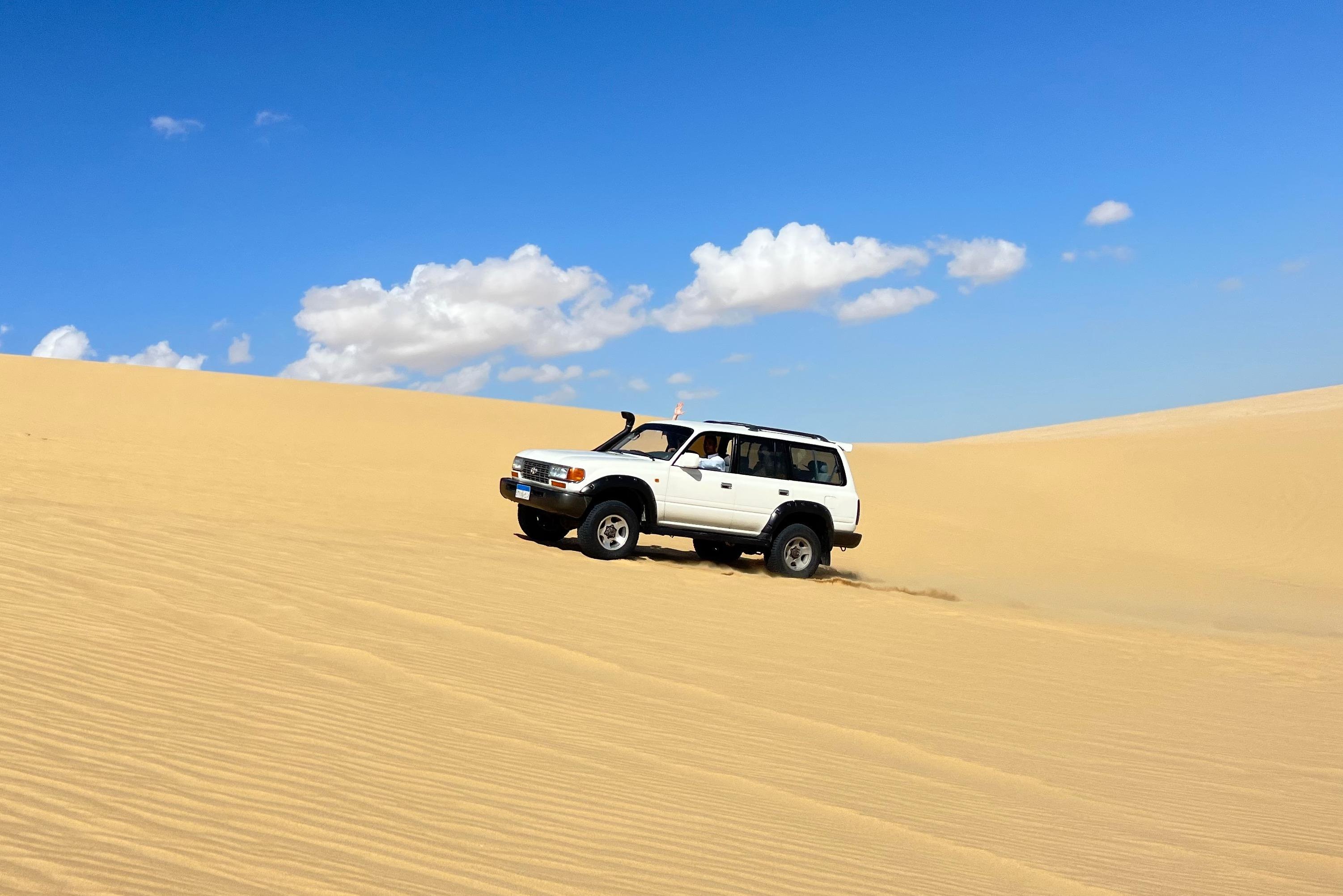
A dramatic landscape featuring massive sand dunes and towering cliffs, perfect for off-road driving.
The area of the park featuring dense chalk formations that can often be accessed via standard vehicles before moving deeper into the park.
The White Desert offers otherworldly geological formations, while Siwa Oasis provides a rich cultural immersion; most visitors find the former more visually alien and the latter more historically rewarding.
| Feature | Top pick White Desert | Siwa Oasis |
|---|---|---|
Primary Feature |
Chalk rock formations | Natural freshwater springs |
Landscape Type |
Lunar desert landscape | Lush palm groves and salt lakes |
Travel Time from Cairo |
5–6 hours by road | 10–12 hours by road |
Cultural Depth |
Minimal nomadic heritage | Distinct Berber-Siwi culture and history |
Key Activity |
Stargazing and camping | Exploring ancient mud-brick fortresses |
Ideal Duration |
1–2 days | 3–4 days |
| See tickets → |
Verdict: Select a black and white desert tour from cairo tours if you prioritize surreal photography and geological wonders, or choose Siwa if you prefer a deeper engagement with remote desert traditions and local village life.
Choose your ticket, select your date, and reserve in under two minutes. Secure checkout handled by our verified partner.
Instant confirmation by email, with a mobile voucher you can save offline. No printing, no queuing at a collection desk.
Arrive at the entrance, show your voucher on your phone, and walk in. Most tickets include priority or skip-the-line access.
Practical details for your visit straight from our verified partners — hours, access, rules, and how to get there.
Wear breathable, light-colored clothing for the day and heavy layers for cold desert nights. Sturdy walking shoes are essential for exploring the rock formations on a black and white desert tour from cairo.
Travel with professional operators who secure necessary permits for the black and white desert tour from cairo. Expect military checkpoints along the road where original passports are required.
The landscape is ideal for capturing the contrast of limestone spires; bring extra batteries. Professional photography tours can be arranged for your black and white desert tour from cairo.
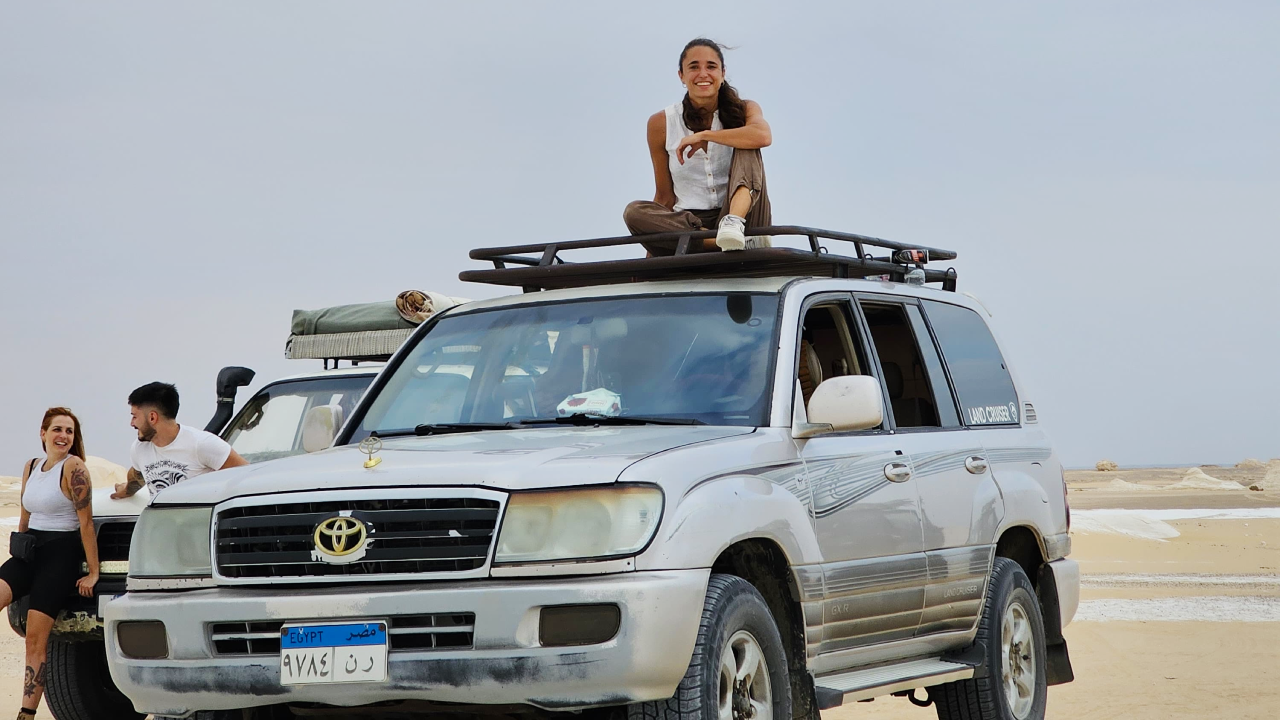
The terrain is rugged, sandy, and uneven, requiring 4x4 vehicles. This black and white desert tour from cairo involves significant time spent off-road.
The black and white desert tour from cairo is suitable for older children, but the long drive and remote camping conditions should be considered. Ensure your tour operator provides appropriate sleeping gear.
Most packages for a black and white desert tour from cairo include meals prepared by Bedouin staff. Carry extra bottled water to stay hydrated in the arid climate.
Best time to go, insider tips, nearby landmarks, and the cancellation fine print — flip through to skim what matters to you.
Flexible, no hidden fees.
Tours often require booking in advance; verify refund terms with your specific operator. Entrance fee of 10 USD (Conservation fee) is typically collected by guides or park rangers on-site.
The chalk spires of Farafra are the floor of a sea that dried out roughly 80 million years ago. Sediment from the Cretaceous Tethys settled here, hardened, and was then carved by wind rather than water. What remains is a white limestone plain studded with mushroom-shaped inselbergs, some standing four metres tall. Egypt gazetted the area as White Desert National Park in 2002, giving formal protection to 3,010 square kilometres of it. The route north of the park explains the other half of the name. Around Bahariya Oasis, the ground turns dark: iron-rich dolerite pushed up through sandstone during ancient volcanic activity, then weathered into black gravel that coats the ochre hills beneath. A black and white desert tour from cairo crosses these two geologies in a single drive, and the contrast is the point. Between them sits Crystal Mountain, a ridge of barite and calcite crystals exposed by road cutting in the 1980s, and the Agabat Valley, where erosion has left conical outcrops rising from pale sand. Human presence here is older than the formations suggest. Bahariya Oasis supported settlement from the Middle Kingdom onward, and in 1996 a donkey's misstep near the oasis led to the Valley of the Golden Mummies, a Greco-Roman necropolis holding several hundred gilded burials. Farafra, the smallest of Egypt's Western Desert oases, remains a village of a few thousand people whose palm gardens and hot springs mark the only reliable water for hundreds of kilometres. The park matters now for reasons beyond scenery. It is one of the darkest accessible night skies within reach of a major capital, which is why overnight camping dominates the black and white desert tour from cairo tours on offer rather than day trips. It is also fragile: the calcite formations erode under contact, and vehicle tracks scar the crust for decades. The conservation fee of 10 USD per person, collected by guides or park rangers, funds ranger patrols and route management. Rangers restrict driving to established tracks for that reason. Addressed formally as White Desert National Park, Farafra, New Valley Governorate, Egypt, the park sits some 500 kilometres from Cairo by road. The distance is what preserved it. Fenneck foxes, rhim gazelles and desert larks persist here because few people pass through. Sunset turns the chalk apricot, then rose, then grey — a sequence that has drawn photographers, geologists and filmmakers to the Western Desert for the better part of a century.

"The chalk spires of Farafra are the floor of a sea that dried out roughly 80 million years ago."
A step-by-step walkthrough of the visit — what you'll see, how long each stage takes, and the details that matter.
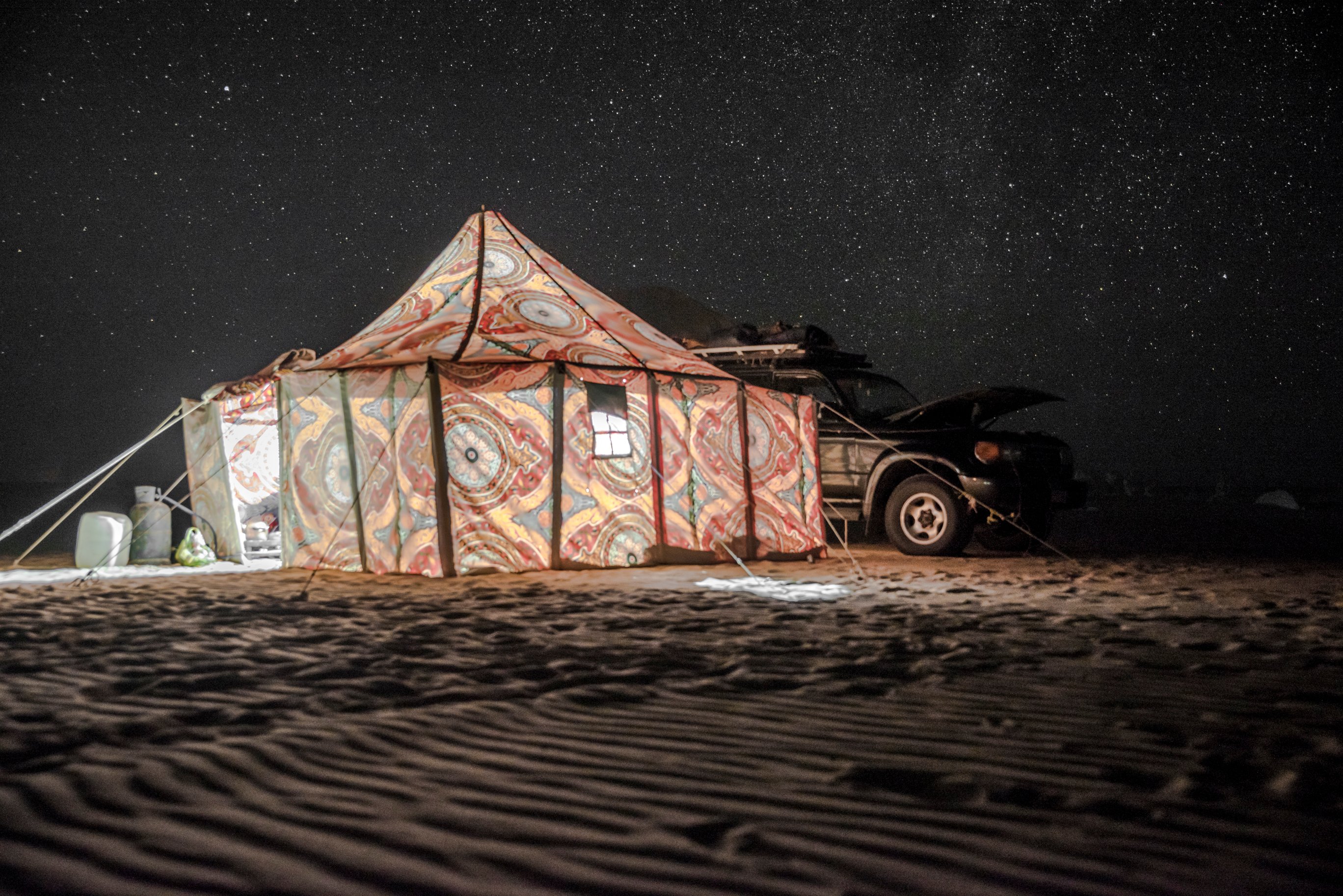
You leave the capital early, because daylight is essential for navigating desert terrain, and the recommended arrival window runs 08:00–16:00. The tarmac holds for four hours or so before the horizon flattens. Somewhere past Bahariya, your driver stops, drops the tyre pressure, and swaps asphalt for gravel. You climb a black cone first. The gravel underfoot is loose and rings faintly. From the top you see the oasis palms behind you and nothing ahead. Back in the vehicle, you pull over at Crystal Mountain and crouch to see quartz and calcite glinting in the ridge — you look, you do not pocket. At Agabat, the sand turns pale and the outcrops sharpen. A black and white desert tour from cairo tour usually reaches the white plain in late afternoon, which is when the chalk begins to change colour. Camp goes up fast. Rugs, a low windbreak, a fire. Dinner is chicken or vegetables cooked over coals, then tea poured from height. Your guide collects the 10 USD conservation fee here if a ranger has not already. The park keeps no gate hours — access runs 00:00–23:59 — so the night is yours. You lie back on a mat and watch the Milky Way come up over formations shaped like mushrooms and rabbits. Morning is cold. You fold the bedding, brush sand from your boots, and drive out past your own tracks.
The park is open 24 hours a day, allowing for flexible scheduling during your black and white desert tour from cairo.
Yes, the White Desert National Park remains open 00:00–23:59 daily.
The mandatory conservation fee is 10 USD per person, which is typically collected by your guide or local park rangers.
The best arrival window for navigating desert terrain safely is 08:00–16:00, with the peak season running from October to March.
No, independent access is not allowed; you must book a licensed black and white desert tour from cairo to ensure safety and legal compliance.
Yes, original passports are strictly required for mandatory military checkpoints along the route to the White Desert.
Yes, most overnight packages for a black and white desert tour from cairo include traditional Bedouin-style camping under the stars.
Key sites include the Mushroom Rock, Chicken Rock, Crystal Mountain, and the vast dunes of the Agabat Valley.
The drive from Cairo to the Bahariya Oasis and the park typically takes 6–7 hours by 4x4 vehicle.
No, you must use a specialized 4x4 with an experienced driver as independent driving in the park is hazardous and restricted.