White Desert Tour From Cairo
Visitor Guide

What Is the White Desert in Egypt

Travellers reach the Farafra Depression expecting sand and find chalk instead — white spires standing over a pale floor, roughly 500 kilometres southwest of Cairo. This page explains what the protected area actually is, how it is administered, and what a trip there asks of you. Practical figures come from the park's own published details, not estimates.

6 min read Updated 2026-09-24 Fact-checked
What Is the White Desert in Egypt

Quick answer

The White Desert is a national park in Egypt's Farafra Depression, Western Desert, where wind-carved chalk formations rise from a pale desert floor. It is open 08:00–19:00 every day of the week, with a conservation fee of 5 USD per person. Access is by 4x4 with a licensed guide; independent driving into the protected zone is not permitted.

The chalk that gives the area its name was laid down on a seabed. Egypt's Western Desert sat under a shallow ocean in the Cretaceous period, and what remains today are the compacted skeletons of marine organisms, later sculpted by abrasive wind into columns, mushrooms and low white domes. Anyone asking what is the white desert in Egypt is really asking about a former seafloor, exposed and eroded over millions of years. Administratively, this is White Desert National Park, a protected area in the Farafra Depression, gazetted to limit off-road damage, litter and unregulated camping. That protection status shapes the visit more than the scenery does. Vehicles follow established tracks. Camps are pitched in designated spots. Rubbish leaves with the group. The park sits within Egypt's Western Desert circuit, usually combined with the Black Desert, Crystal Mountain and the springs around Bahariya Oasis, so few people arrive for the chalk alone. Most visitors come on an organised White Desert tour from Cairo, because the depression lies deep in the Western Desert with no public transport reaching the protected zone. Trips typically run overnight: a long transfer, an afternoon among the formations, dinner cooked at camp, and a dawn return when the low sun turns the chalk faintly orange. Egyptian guides often call the area الصحراء البيضاء — the White Desert — and the same operators handle the permits, the 4x4 and the camping equipment. What to do with this answer depends on the traveller's tolerance for distance. This is not a half-day excursion from Cairo. It is a committed journey across desert road, and the reward is a landscape that looks nothing like the Giza plateau or the Nile Valley temples most itineraries cover. Summer daytime heat in the depression is severe; winter nights drop close to freezing under canvas. Read the timing section before fixing dates. Anyone still weighing what is the white desert in Egypt against the rest of an Egyptian itinerary should treat it as a landscape destination rather than an archaeological one — the interest lies in geology, silence and the night sky. The sections below cover formations, hours, fees and transport in detail.

“The chalk that gives the White Desert its name was laid down on a seabed, then carved by wind into columns and domes.”
What to see

Notable Formations in the White Desert in Egypt

The White Desert features unique landscapes shaped by wind erosion, creating distinct contrasts between the chalky white terrain and the iron-rich dark surroundings. These formations offer visitors a clear look at the region's diverse topography.

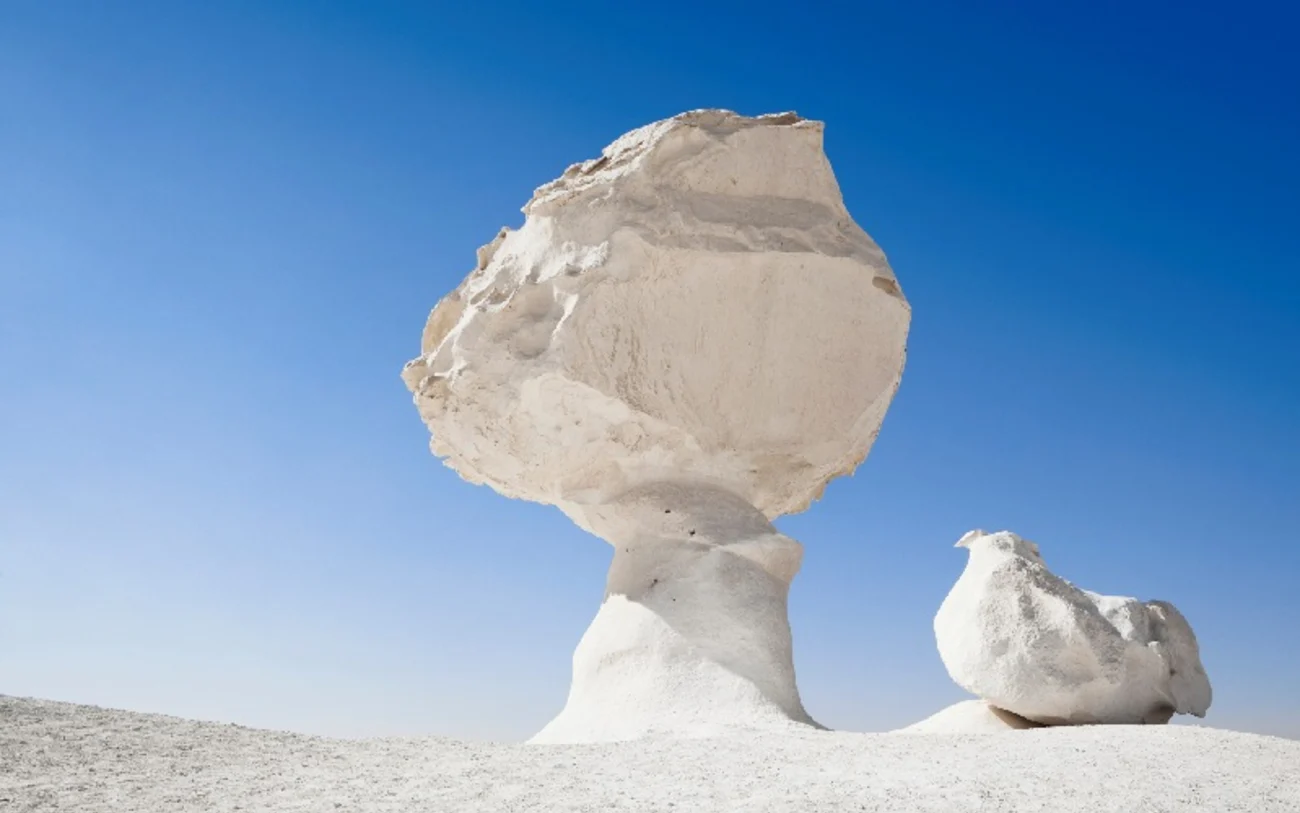
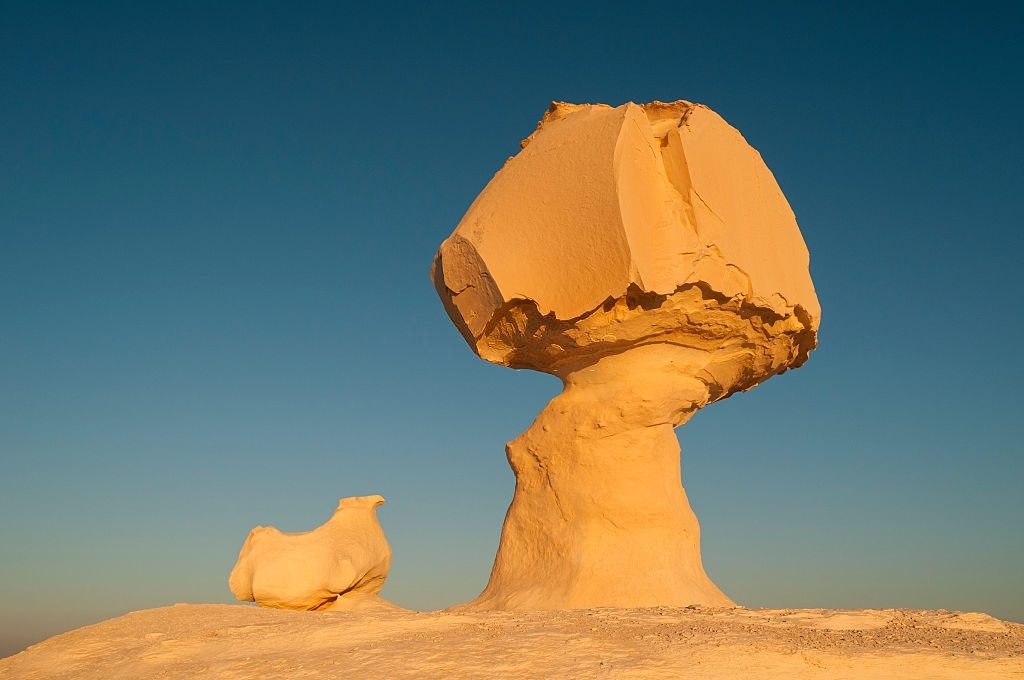
Mushroom and Chicken Formations

Mushroom and Chicken Formations

These chalk structures resemble giant mushrooms and poultry due to centuries of erosion. They represent the most recognizable silhouettes within the park's central area.

Walk around these structures at sunrise to capture sharp shadows.
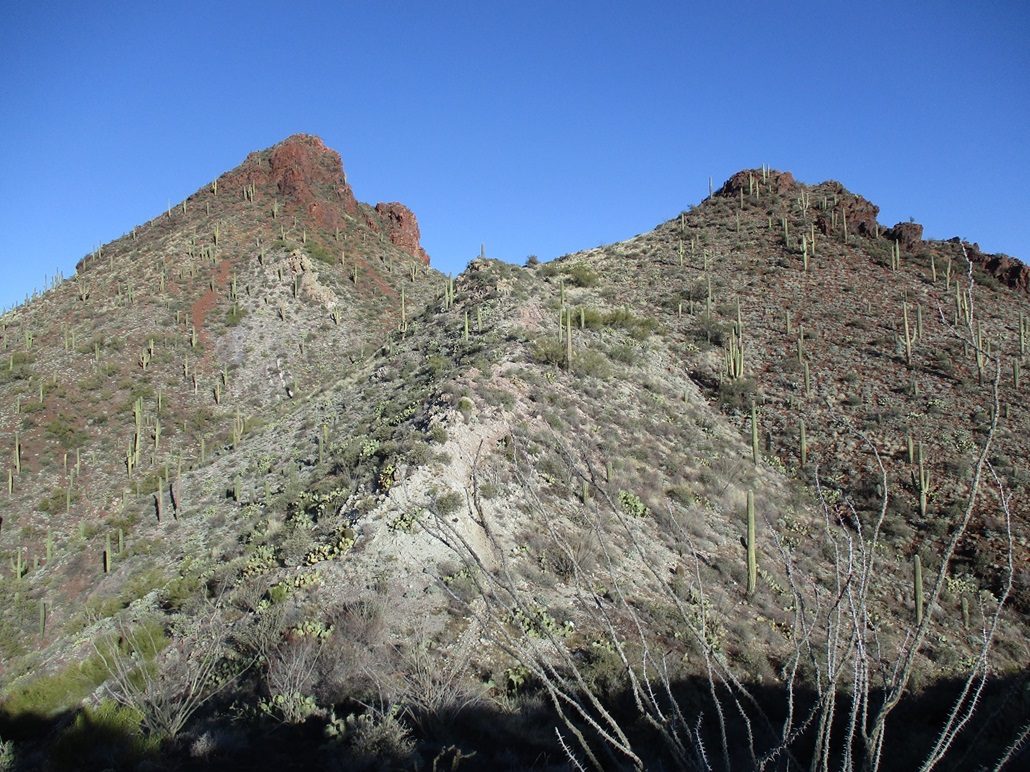
Twin Peaks

Twin Peaks

These two prominent chalk mounds rise sharply from the desert floor, providing a reference point in the landscape. They illustrate the endurance of harder rock layers against wind.

View them from a distance to appreciate their scale.

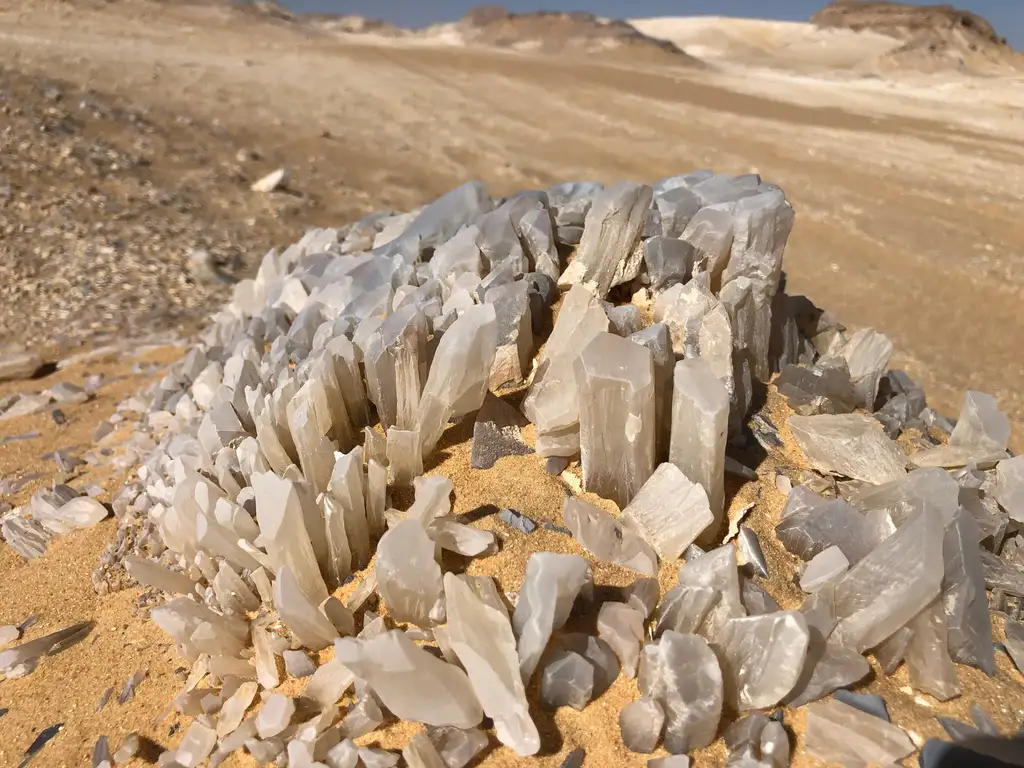
Crystal Mountain

Crystal Mountain

Located between the Bahariya Oasis and the White Desert, this ridge is composed of calcite crystals that glitter in the sunlight. It stands as a geological contrast to the surrounding limestone.

Touch the surface gently to observe the natural crystal clarity.

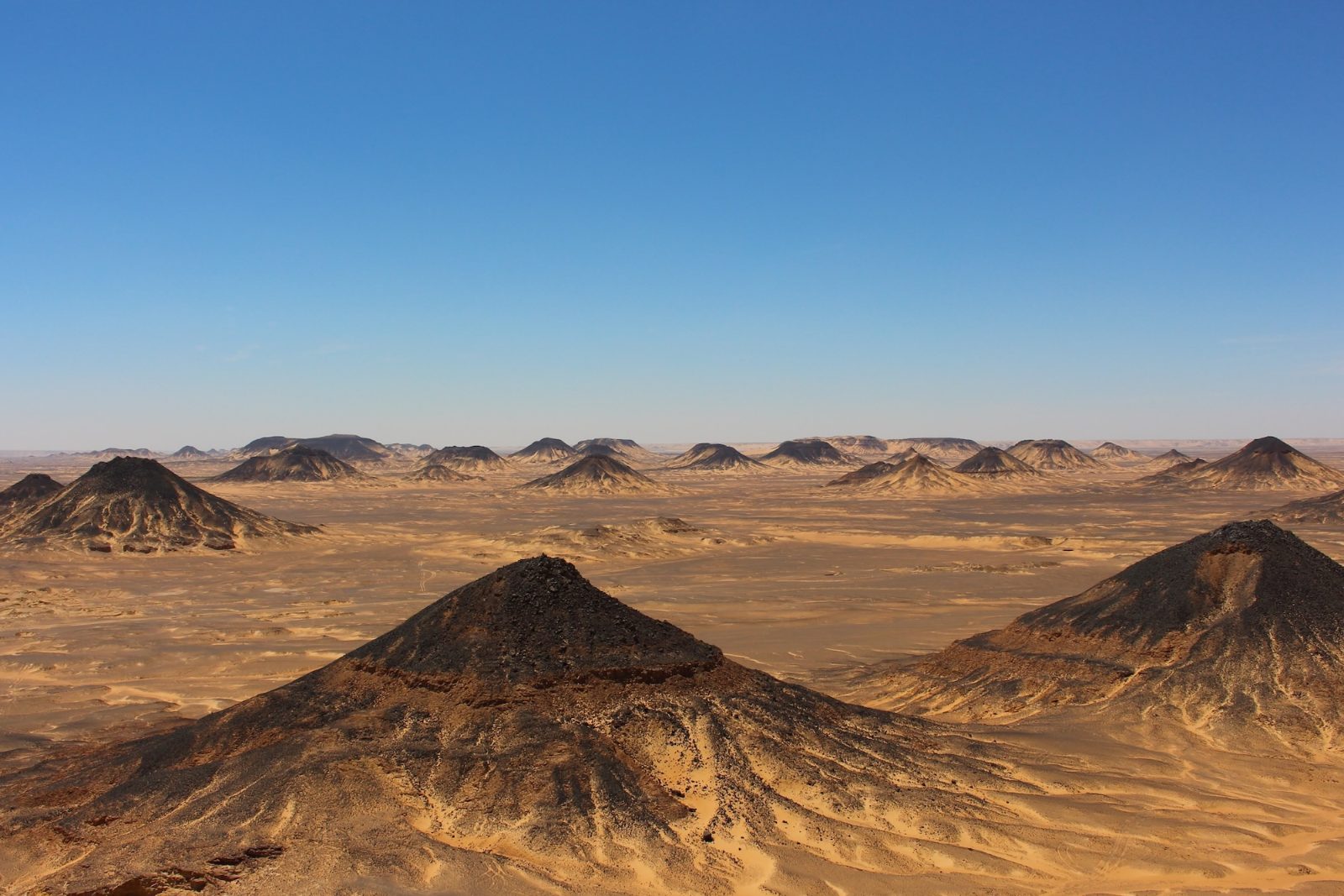
Black Desert

Black Desert

Characterized by volcanic hills topped with black basalt, this area transitions into the White Desert. The dark material provides a visual shift from the soft white chalk.

Visit during late afternoon for higher contrast in photography.

Opening hours

Operating Hours for the White Desert in Egypt

The White Desert National Park operates on a consistent daily schedule to accommodate visitors. These hours ensure access to the desert landscape throughout the week.

Monday
08:00–19:00
Tuesday
08:00–19:00
Wednesday
08:00–19:00
Thursday
08:00–19:00
Friday
08:00–19:00
Saturday
08:00–19:00
Sunday
08:00–19:00
Visitors are encouraged to arrive within the optimal window of 08:00–18:00 to facilitate exploration and camping setup before sunset.
Directions

How to Get to the White Desert in Egypt

The White Desert National Park is located within the Farafra Depression in Egypt's Western Desert. Access typically requires travel from Cairo via the Bahariya Oasis, necessitating a four-wheel-drive vehicle to navigate the desert terrain.

Car 5-6 hours —

Cairo to Bahariya Oasis via Desert Road

Taxi 2-3 hours —

Bahariya Oasis to White Desert National Park

Bus 6-7 hours —

Cairo to Bahariya Oasis

Visitors should aim for the best arrival window of 08:00–18:00 to ensure sufficient daylight for exploring the rock formations and reaching camping sites before nightfall.

Book

Check availability

Frequently asked

Common questions about what is the white desert in egypt

Everything you need to know about what is the white desert in egypt

What is the white desert in egypt?

The White Desert is a unique protected area in the Farafra Depression characterized by massive chalk rock formations created by erosion. Understanding what is the white desert in egypt requires recognizing its geological significance as a prehistoric seabed now exposed to the elements. It serves as a stark contrast to the typical sand-dominated landscapes found elsewhere in the country. Visitors often ask what is the white desert in egypt because of its distinct, snow-like appearance caused by wind-sculpted white limestone. This attraction is a managed conservation area where visitors must adhere to park regulations to preserve the fragile geological features. To ensure an optimal visit, travelers should plan their arrival window between 08:00 and 18:00 to navigate safely and enjoy the formations. The official conservation and entrance fee is 5 USD per person. Due to the remote nature of the Western Desert, it is highly recommended to visit with an experienced local guide who understands the terrain and safety requirements. When considering what is the white desert in egypt, remember that it is a vast, arid environment requiring ample preparation for sun exposure and temperature shifts. The park offers an opportunity to view unique chalk sculptures in a quiet, natural setting. While children can appreciate the unusual landscape, the remote location and lack of facilities mean that parents must be thoroughly prepared for long travel times and rugged conditions.

Keep reading

More guides & pages